Opening of the 46th Joint Conference on Medical Informatics (JCMI 46)
The 46th Joint Conference on Medical Informatics
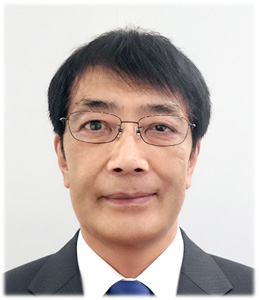
Grand Chairman Sunao Watanabe M.D., Ph.D. Advisor, Medical Information Development Center of Japan (MEDIS-DC); Director of Cardiovascular Medicine and Vice President, Second Kawasaki Saiwai Clinic
Welcome to the official website of the 46th Joint Conference on Medical Informatics (JCMI 46). I am greatly looking forward to welcoming you all to Sapporo in the autumn.
The theme of this conference is "Towards Appropriate, Timely, and Easy Sharing of Health Information."
With the ambition of establishing a "compass" for medical information as we approach the full-scale implementation of the National Medical Information Platform planned for 2030, we have assembled a dedicated leadership team. I am pleased to welcome Dr. Shunsuke Doi from Chiba University as the Program Committee Chair. Mr. Hidefumi Shito from Tokyo Medical University, an organizer of the Kanto Medical Information Technologists Association who demonstrated exceptional leadership during the first fully virtual spring conference in 2020, serves as the Executive Committee Chair. To oversee operations on the ground in Sapporo while we coordinate from the Kanto region, Dr. Takumi Tanikawa of Hokkaido University has assumed the role of General Affairs Committee Chair, supported by Dr. Yuji Sase of Hokkaido Information University as the Secretary-General.
There is a specific reason why I chose "Health Information" rather than "Medical Information" for our theme. Furthermore, I have listed my title not only as an advisor to the Medical Information System Development Center but also as a Director of Cardiovascular Medicine. This is a deliberate expression of my commitment to viewing medical informatics from the perspective of an information user—specifically, as a full-time, practicing clinician.
The practice of medicine, regardless of specialty or profession, must be implemented based on a comprehensive understanding of the patient. I wish to emphasize the fundamental principle of clinical practice as stated by Dr. Lawrence L. Weed, the founder of the Problem-Oriented System (POS): "Medicine must begin with the skillful listing of the patient’s problems." This recognition demands a specific type of information collection. Naturally, narrow "medical information" is insufficient for understanding a person’s "health info." It must encompass functional status, predispositions, and more broadly, their social roles and personal aspirations.
In the field of medical informatics, discussions often focus heavily on "how" (the technical means). However, I intend to bring a focus on "what"—what specific information must be captured to provide comprehensive health management. I am committed to building this conference while maintaining the perspective of a frontline clinician.
What specific elements of comprehensive health information should be appropriately captured? And, in an era where the involvement of multiple health providers and collaborative management across various facilities is essential, how should that information be shared? Setting "what" as our central axis, we will explore how to communicate this information in a "timely" manner. Furthermore, amidst the trend of labor shortages despite increasingly sophisticated medical care, we will discuss how to make these processes "easy" by leveraging technologies such as Generative AI. I look forward to the evolution of these discussions.
While mid-November in Sapporo marks the beginning of winter, it remains an exceptionally beautiful city. Although information can be acquired through virtual meetings, there is immense value in gathering in person to debate, deliberate, and deepen our connections through direct encounter and dialogue. Sapporo is the perfect setting for such an occasion.
We look forward to seeing you there!